
Amazon Prime is one of those memberships that can feel essential long after your actual behavior changes.
That is why “Do I still have Prime?” is the wrong question.
The better question is this: Is Prime still solving a recurring problem often enough to justify what you pay now?
For some households, the answer is yes. Prime still earns its place when fast delivery removes real friction, when Prime Video is part of your regular routine, or when a lower-cost Prime plan fits your situation.
For others, Prime becomes expensive background convenience. The membership stays on, but the actual value fades.
This guide is built to help you make the decision the clean way: based on your last 30 days, your real usage, and the version of Prime you are actually paying for.
Quick answer: Is Amazon Prime worth it in 2026?
Amazon Prime is usually worth keeping if it solved a real problem for you more than once in the last month, or if it clearly replaced another cost you would still pay anyway.
Amazon Prime is usually not worth keeping if you mostly pay for the possibility of using it, not repeated real use.
Amazon Prime is often better switched than blindly kept if your main need is groceries, household essentials, or a lower-cost delivery setup rather than the full Prime bundle.
The most expensive Prime membership is not always the heaviest-use one. In practice, it is often the membership kept for backup value, vague convenience, or a version of your life that no longer matches how you shop.
The fast decision table
| Your current pattern | Usual best call | Why |
|---|---|---|
| You place frequent small orders where speed genuinely matters | Keep | Prime still removes recurring friction |
| You mostly keep Prime for Prime Video, but rarely shop urgently | Recheck | The value case is weaker if delivery is not doing much work |
| You place a few larger, planned orders each month | Cancel | Prime often gets replaced by better planning and free-shipping thresholds |
| You qualify for a discounted Prime plan | Switch plans, not necessarily cancel | Your problem may be price, not Prime itself |
| Your real need is groceries and essentials | Compare alternatives | A grocery-first membership may fit better than the full Prime bundle |
What Amazon Prime costs in 2026
Amazon lists standard Prime in the U.S. at $14.99 per month or $139 per year. Amazon also lists Prime Video on its own at $8.99 per month. Eligible 18–24 year-olds and students can get Prime for Young Adults at $7.49 per month or $69 per year after the trial, and eligible government-assistance or income-verified customers can get Prime Access for $6.99 per month. (Prime membership fee; Prime for Young Adults; Prime Access)
That matters because there is no single “Prime price.” There is the standard plan, there are lower-cost versions for some users, and there is a separate question of whether you are really using enough of the bundle to justify any of them.
What changed recently that affects the value
Two recent changes matter more than most people realize.
First, the Prime Video value calculation shifted again. Amazon announced that, in the U.S., Prime Video’s Ad Free subscription becomes Prime Video Ultra on April 10, 2026, priced at $4.99 per month. That means “I keep Prime mainly for video” is no longer the same value case it used to be. (Official update)
Second, Amazon says Prime benefit sharing through the Prime Invitee program ended on October 1, 2025. So if part of your old Prime logic depended on sharing benefits outside your household, that case is weaker now. (Share your Amazon Prime benefits)
The real question most people miss
A lot of Prime decisions get framed the wrong way.
People ask, “How many orders do I need to make Prime worth it?”
That sounds practical, but it is usually too simplistic.
There is no universal order-count rule because the value of Prime depends on urgency, order size, whether delivery speed changes your week, whether Prime Video is a real habit, and whether a different membership would fit better.
A better question is this:
What did Prime do for me in the last 30 days that I would have genuinely noticed without it?
That question usually gets you closer to the truth than generic break-even math copied from roundup posts.

The 30-day Prime check
Use your last 30 days, not your ideal month.
- Did fast delivery solve a real problem more than once?
- Did you actively use Prime Video enough that you would still pay for it separately next month?
- Did Prime replace another cost you would otherwise still pay?
- If Prime disappeared tomorrow, would you notice within a week?
Here is the rule I would use:
- 4 yes answers: Prime is probably still earning its cost.
- 2–3 yes answers: You need to look at which benefits matter and whether a cheaper path fits.
- 0–1 yes answers: Prime is probably surviving on habit more than value.
Who should usually keep Prime
Prime is often still worth it for people in one of these patterns:
1) Small urgent orders are a real part of your life
If you regularly need household basics, work items, pet supplies, or other recurring items quickly, Prime may still remove enough friction to justify the fee.
2) You use more than one part of the bundle
Prime gets stronger when it is not only about shipping. If delivery matters and Prime Video is part of your regular routine, the membership is doing more than one job.
3) A lower-cost Prime plan fits you
If you qualify for Prime for Young Adults or Prime Access, the question may not be “cancel or keep.” It may be “why am I paying for the standard version?”
4) Prime solves a recurring problem, not a hypothetical one
This is the simplest keep test. If Prime makes your real month easier in a repeated way, keeping it is usually reasonable.
Disclosure: This post contains affiliate links. If you sign up through them, I may earn a commission at no extra cost to you.
If Prime still solves a real problem for you, check the current Prime options before you decide.
Best fit for people who regularly use fast delivery, Prime Video, or qualify for a lower-cost Prime plan.
Who should usually cancel Prime
Prime is often not worth it anymore when the pattern looks like this:
1) You mostly place planned, larger orders
If you are already combining purchases into fewer orders, Prime’s speed advantage is doing less work.
2) You keep it for “just in case” value
This is the most common overpayment pattern. Prime feels useful in theory, but when you look at the last month, you cannot point to what really mattered.
3) Prime Video is more backup app than real habit
If you say you “have” Prime Video but rarely open it, that is not the same as a service you would actively choose to pay for.
4) Your old logic depended on sharing outside your household
That value case is weaker now that Prime Invitee sharing is gone.
Who should switch instead of just keeping Prime
Sometimes the right answer is not “keep” or “cancel.” It is “stop paying for the wrong bundle.”
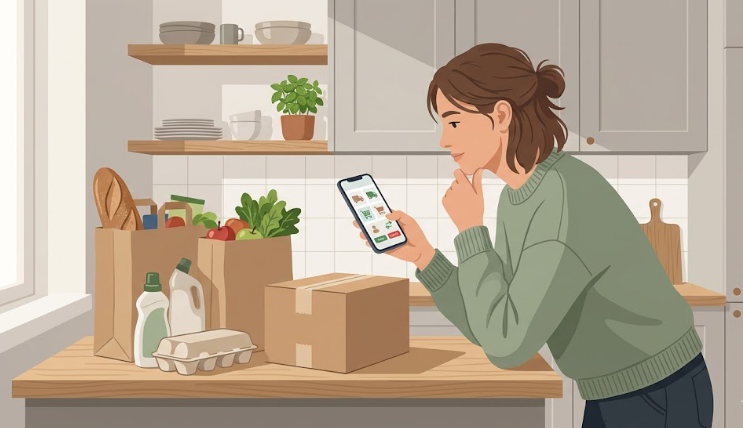
That is especially true if your real pattern is groceries, restocks, and essentials, not broad Amazon shopping.
If your delivery life is more about weekly groceries, household basics, and store-based restocks, a grocery-first membership may fit better than Prime.
That is why the smarter question is sometimes not “Should I keep Prime?” but “Am I trying to solve the wrong problem with Prime?”
If that sounds like you, read this next: Best Amazon Prime Alternatives (If Shipping Is Your Only Reason).
Can you get free shipping without Prime?
Sometimes, yes.
Amazon says eligible orders can still qualify for Free Shipping by Amazon when they meet the minimum threshold on eligible items. In other words, Prime is not the only path to free shipping. (Free Shipping by Amazon)
That does not mean non-Prime is always better. It means Prime needs to justify speed, convenience, and repeated use—not just the existence of shipping fees.
Prime for shipping vs Prime for video vs Prime for habit
Prime for shipping
If shipping is your main reason, ask whether speed changed your life recently or merely made shopping feel smoother.
Prime for video
If video is your main reason, ask whether you would still choose it as a paid service on its own. That question matters more now that Prime Video’s premium ad-free option is shifting to Prime Video Ultra in the U.S.
Prime for habit
This is the weakest reason to keep it. Habit feels like value because the membership is already there. But habit is exactly what makes a subscription survive longer than its usefulness.
My rule for unclear cases
If the answer still feels mixed, do not argue with yourself forever.
Use this test:
- Cancel for 30 days.
- Track only two things: how often delivery speed truly becomes a problem, and whether Prime Video crosses your mind without prompting.
- If you rejoin quickly for a clear reason, keep it and stop second-guessing.
- If you do not, the membership was probably doing less than you thought.
That is not an anti-Prime test. It is simply the cleanest way to separate real value from autopilot.
So, is Amazon Prime worth it in 2026?
For many people, yes.
But not for the same reasons as before.
Prime is still worth it when it solves repeated real-life friction, when you actively use more than one benefit, or when you qualify for a cheaper version that fits your situation.
Prime is usually not worth it when you are paying for possibility instead of repeated need.
And if your real need is groceries or household restocks, the better move may be to switch instead of blindly renew.
FAQ
Is Amazon Prime still $14.99 per month in the U.S.?
Yes. Amazon lists standard Prime at $14.99 per month or $139 per year in the U.S.
Is there a cheaper version of Amazon Prime?
Yes. Amazon offers Prime for Young Adults and Prime Access for eligible customers at lower prices than the standard plan.
Can I get free shipping without Prime?
Sometimes. Amazon says eligible orders can still qualify for Free Shipping by Amazon when they meet the required threshold.
What changed with Prime Video?
Amazon announced that Prime Video’s Ad Free option becomes Prime Video Ultra in the U.S. on April 10, 2026 for $4.99 per month.
Can I still share Prime shipping outside my household?
Amazon says Prime benefit sharing through the Prime Invitee program ended on October 1, 2025.
Next step
If your answer is “probably not worth it”, read this next: Should I Cancel Amazon Prime? How to Know If It’s Time.
If your answer is “I only keep it for shipping”, go here: Best Amazon Prime Alternatives (If Shipping Is Your Only Reason).
If your answer is “I want to cancel, but I care about getting money back”, read this next: Amazon Prime refund rules: who qualifies (and who doesn’t).