Quick answer: Verizon 5G Home Internet is usually the better choice if your goal is a simpler bill with fewer moving parts. Xfinity is usually the better choice if your household truly benefits from a higher speed ladder or your address gets a cable plan that still makes sense over time.
This is not really a “which company is better?” article. It is a “are you paying for more internet than your home actually needs?” article.
Keep, switch, or stay?
Choose Verizon 5G Home Internet if your biggest goal is lowering bill friction, cutting equipment drama, and keeping home internet simple.
Keep Xfinity if your household genuinely needs more speed options, more headroom, or a cable setup your home actually uses.
Do not switch just because “wireless sounds cheaper.” A bad switch is still a bad switch if your address is not a good fit or your savings are too small to matter.
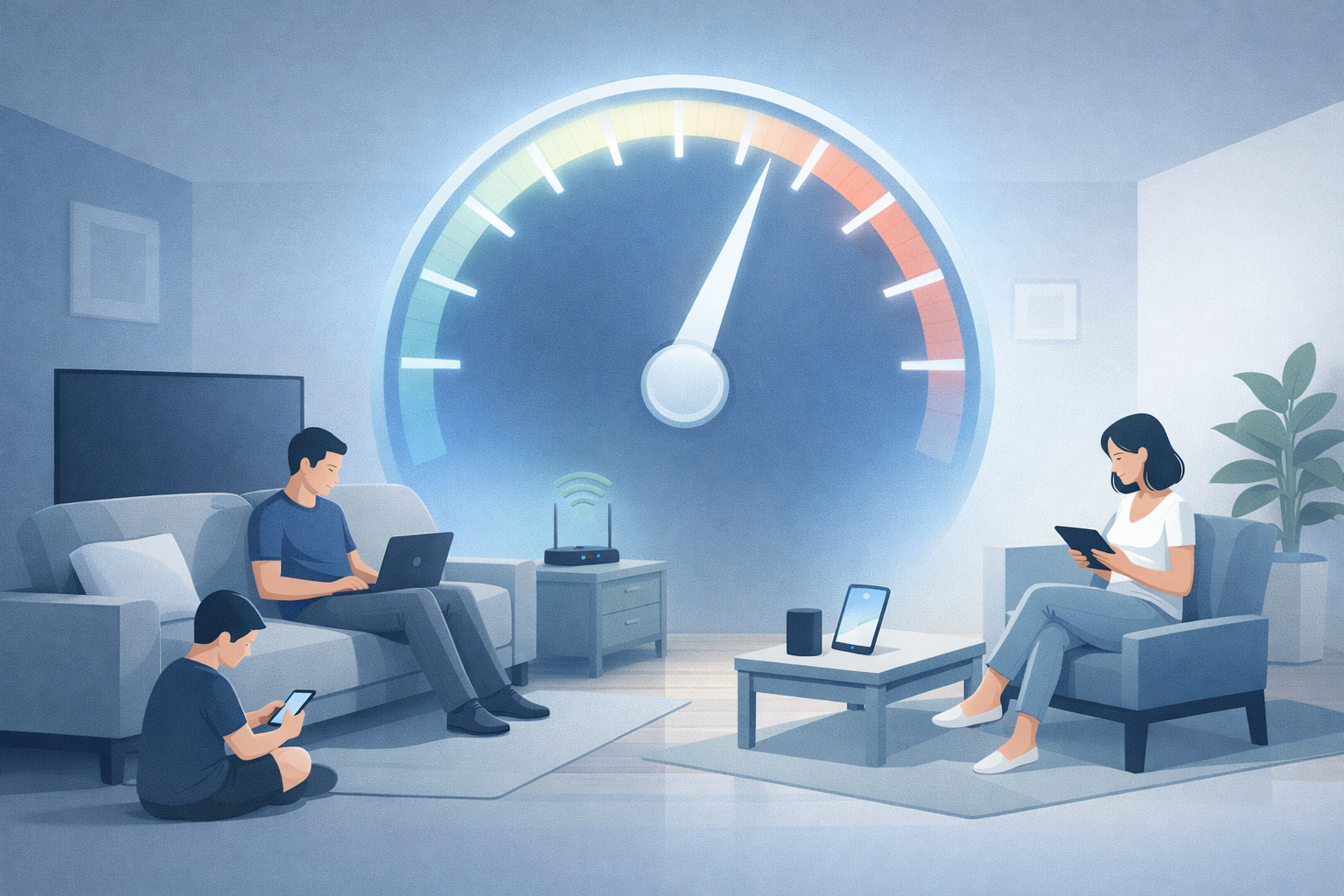
The real problem is not the brand. It is speed anxiety.
A lot of people are not overpaying because they picked the wrong internet company.
They are overpaying because they kept a faster or more complicated setup than their home actually needs.
That is what I mean by speed anxiety: the feeling that “faster must be safer,” even when your house mostly streams, scrolls, works, and video-calls just fine on much less than you imagine.
That anxiety turns into a money leak when it keeps you paying for unused headroom every month.
A quick price snapshot
- Verizon 5G Home Internet currently starts at $35/mo with Auto Pay and an eligible Verizon mobile phone plan, with a 3-year price lock.
- Xfinity currently advertises 300 Mbps for $40/mo for 5 years and 1 Gig + Streaming for $60/mo for 5 years, with no annual contract.
- The better deal is not just the lower sticker price. It is the plan that matches your household’s real usage without paying for unused headroom.
Because internet pricing changes by address, eligibility, and billing setup, treat these as current offer snapshots, not permanent truths.
When Verizon 5G Home Internet makes more sense
Verizon makes more sense when your home does not need to chase headline speed numbers and your priority is simpler internet, not maximum internet.
- Your household mostly streams, browses, video-calls, and does normal day-to-day internet use.
- You are tired of overthinking routers, equipment, and cable-style plan complexity.
- You want a cleaner bill with fewer moving parts.
- Your current internet feels oversized for what your home really does.
This is the uncomfortable truth for a lot of homes: a normal household often does not need the kind of speed tier it has been paying for out of habit.
That is especially true if the heaviest things your home does are 4K streaming, regular Zoom calls, smartphones on Wi-Fi, and everyday laptop use.
When Xfinity still makes sense
Xfinity still makes sense when your household is not just “internet active,” but genuinely heavier-use in ways that justify more speed options or a stronger cable setup.
- A larger household with several people using the internet heavily at the same time.
- A work-from-home setup that regularly moves large files, uploads media, or depends on higher throughput.
- A home where internet demand is consistently above normal streaming-and-browsing use.
- An address where the current Xfinity offer is strong enough that staying is still rational.
That does not mean “cable is always better.” It means some households really do get value from having a wider speed ladder available.
Who is most likely overpaying?
You are more likely to be overpaying if any of this sounds like you:
- You picked a faster plan “just in case” and never revisited it.
- Your house mostly streams, browses, and works online normally.
- You have not checked your plan since your home usage changed.
- You still assume cable is the only “serious” home internet option.
- You are paying for psychological comfort more than practical need.
That last one matters most. Many internet bills stay high not because the household needs them, but because nobody wants to be the one who risks “slower internet.”
Do this before you switch
Do not decide from memory. Check three things first:
- What speed are you paying for now? Look at your actual bill, not what you think you signed up for.
- What does your home actually do every day? Normal streaming and video calls are not the same as a genuinely heavy-use household.
- Is Verizon 5G Home Internet available at your address? Availability is address-specific, so this is not a theoretical comparison.
Then ask the real question: am I paying for internet I use, or internet that merely makes me feel safer?
Who should not switch to Verizon 5G Home Internet
You probably should not switch if:
- Your address is not a good fit for Verizon 5G Home Internet.
- Your household genuinely benefits from higher-speed cable options.
- Your current Xfinity setup is still delivering strong value for your actual needs.
- You are solving for maximum performance rather than simpler monthly cost.
The wrong switch is not just annoying. It can leave you doing extra work for very little real savings.
Where Verizon is most likely to save money
Verizon is most likely to save money in homes where internet has become overbuilt.
- You do not really need a high speed ladder.
- You want fewer pricing variables and less equipment friction.
- You are paying for a bigger cable plan mainly because downgrading feels risky.
- You want to cut internet cost without turning your house upside down.
That is the key Is It Still Worth It? move here: not asking “which brand wins,” but asking “which setup is too much for my actual home?”
The decision
If your goal is maximum simplicity and lower bill friction, Verizon 5G Home Internet is usually the better fit.
If your goal is keeping a stronger speed ladder that your household genuinely uses, Xfinity may still deserve its place.
The wrong move is not choosing Verizon or Xfinity.
The wrong move is paying for more internet than your home actually needs because “faster” felt safer than checking.
FAQ
Is Verizon 5G Home Internet cheaper than Xfinity?
Sometimes, but not universally. The better comparison is not just the advertised monthly price. It is the total value at your address, for your usage, with your actual household needs.
Is 5G home internet good enough for most homes?
It can be. For many homes, the biggest internet tasks are still streaming, video calls, browsing, and everyday device use rather than constant heavy transfer needs.
Does Xfinity still make sense if I want to save money?
Yes, sometimes. If your current offer is strong and your household really uses that setup, staying can still be the smarter move.
What should I check before switching internet providers?
Check your current bill, your household’s real usage, and whether Verizon 5G Home Internet is even available at your address before making the decision.