Quick Answer: Car subscription fees come in two kinds, and the outrage tends to land on the wrong one. Fees for features that already work without a live connection, like remote start through built-in hardware, are the ones to question first. Fees for real connected services, like automatic crash response, stolen vehicle help, EV charging tools, or live data, can earn their place if you use them. Two questions settle most of it: does the feature need an active connection to function, and would you still pay for it if the free trial had never existed? If the answer to both is no, that is the fee to drop.
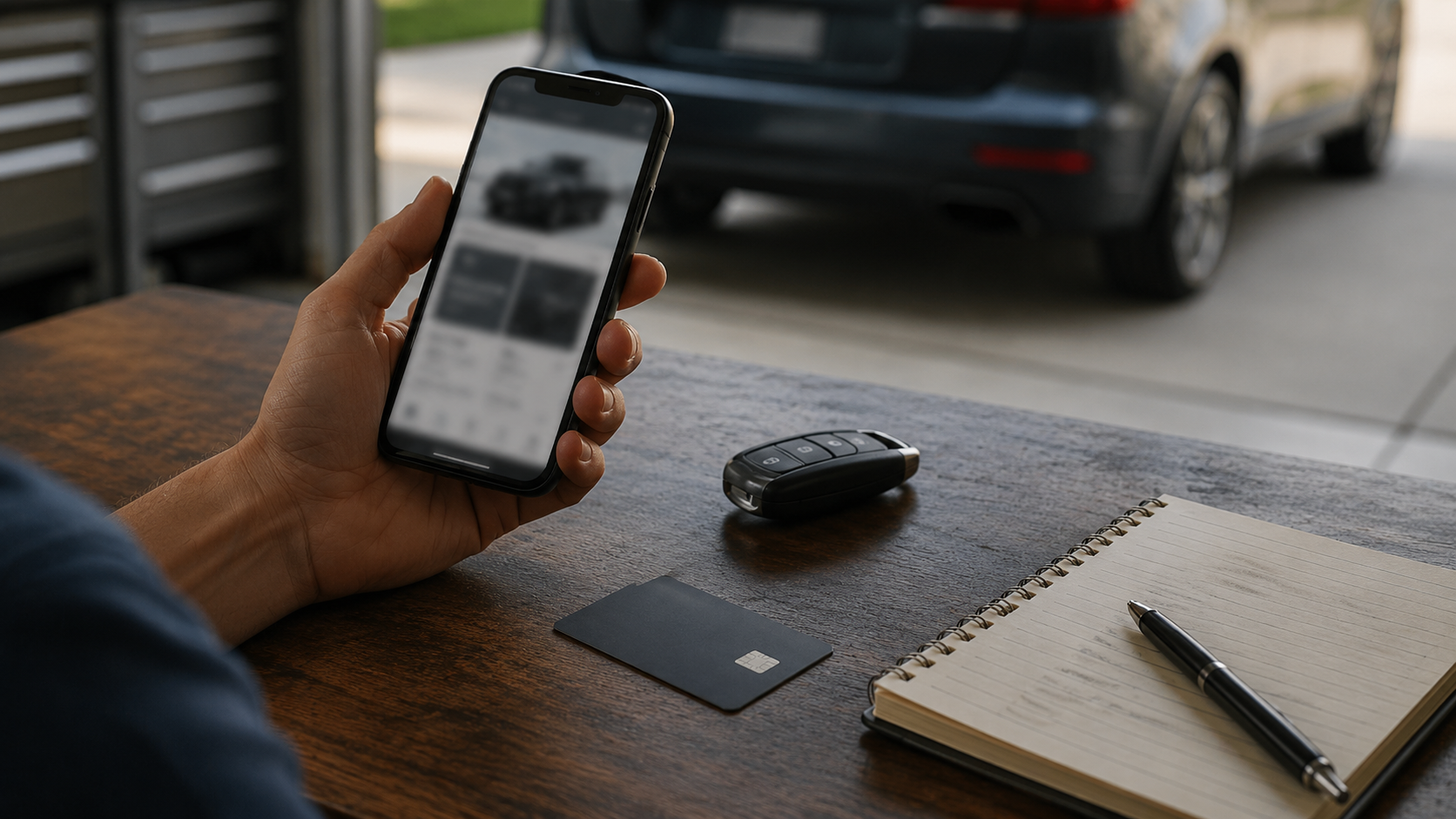
It is fifteen degrees out. You walk to the car with your coffee and tap remote start in the app, the way you have every cold morning since you bought it. Instead of a warm cabin, the screen asks for a plan. The free trial ended three months ago, in an email you skimmed and forgot.
Here is the part the dealership does not put on a banner. You bought the car, so the features are yours. You own the car. You rent the permission to use some of the parts that came in it.
The popular verdict is that car subscriptions are a scam, full stop. That blanket take feels great and sorts nothing, because the fees are not all the same, and the anger keeps hitting whichever one is loudest instead of whichever one is worst. Here is the cleaner cut. For a feature that runs on hardware already in the car and needs no live data, question the fee hard. For a service that genuinely talks to a server every time you use it, ask whether you use it enough to pay. The rest of this guide sorts the common fees into those two buckets, with verified 2026 prices, so you keep what pulls its weight and drop what does not.
Why car subscription fees hit a different nerve
A streaming price hike is annoying. A car subscription lands somewhere worse, because you already bought the car, plus insurance, registration, fuel or charging, maintenance, and maybe a loan. So when a feature slides from “included trial” to “monthly plan,” it reads less like a new service and more like rent on something parked in your driveway.
That reaction is not just noise. Carmakers build the heating elements, the remote start module, and the cellular radio into the car, hand you the keys, and then ask for a monthly fee to switch on parts already bolted in. The industry calls this flexibility. S&P Global Mobility calls connected services a core part of the shift toward recurring revenue, which is the same thing said politely. The app went from afterthought to business model.
The strategy hit a wall the moment it touched hardware people felt they owned. BMW tried charging monthly for heated seats, absorbed years of ridicule, and pulled the heated-seat subscription, while keeping fees for software that leans on data and updates. That is the whole line, drawn in public: drivers will pay for a live service and revolt against rent on a bolt-in part.
Lawmakers drew the same line. A 2025 New York bill passed both chambers but was vetoed by the governor, and the effort has carried into 2026. The proposal would block fees on features that rely only on installed hardware and work without ongoing support, while carving out services that depend on data or connectivity, such as telematics, in-vehicle Wi-Fi, satellite radio, roadside assistance, and driver-automation features. New Jersey and Massachusetts have floated similar measures. The catch writes itself: the rule turns on whether a feature “needs ongoing service,” and automakers are highly motivated to make more things technically need it. Treat the status as a moving target and check where it stands if you live in one of those states. The signal holds either way: selling you back your own hardware is under pressure, and selling a live service is not.
The two questions that sort every car fee
Strip the brand names and the marketing tiers, half of which read like someone put a subscription brochure in a blender, and every car subscription answers to two tests.
One: does the feature need a live connection to do its job? Heated seats need ongoing cloud support. Heated seats do not. The element is in the cushion, and once it is on it works in a dead-signal parking garage. Remote start from a fob button does not need a connection either. Remote start through an app does, because the app has to reach a server that reaches the car. Automatic crash response needs a connection every second it might matter, because it exists to call for help when you cannot. A feature that keeps working when the tower goes dark is one you have a strong claim to use without paying monthly. A feature that has to phone a server is closer to a real service.
Two: would you still pay for this if the free trial had never existed? A trial is not generosity. It is a calibration period for your sense of normal. After a year of app control, losing it feels like a downgrade even if you would never have bought it on day one. The feature becomes normal before the price appears. That is not a happy accident. That is the design. So picture the version of you who never had the trial, and ask whether that person opens a wallet for it. If the honest answer is no, you are not keeping a service. You are keeping a habit that was trained into you.
The frustration is rarely that connected cars are useless. The problem is narrower: one or two genuinely useful features get welded to a larger plan. Drivers weigh whether app remote start, remote lock, or vehicle location alone is worth the renewal, and land on the same question: why does keeping the one thing I use require buying the eight things I do not?
What car subscriptions cost in 2026
Pricing shifts by model year, trim, region, and trial length, and brands update these numbers quietly. Check the live figure in your own owner app before you cancel or renew. As of June 2026, the examples below show the decision is no longer pocket change.
| Brand / service | Roughly what you pay after the trial | The catch worth knowing |
|---|---|---|
| Toyota Connected Services | Music Lover $15/mo, Go Anywhere $15/mo, Premium $25/mo; Wi-Fi separate | On newer systems you cannot keep app remote start without buying a $15 bundle you may not otherwise want |
| GM OnStar | 2025 and newer: Connect $9.99/mo, Connect Plus $19.99/mo, OnStar One starts at $34.99/mo. Super Cruise hands-free runs separately, around $40/mo | Core features are free for 8 years, but plan names and the mid-tier safety price shift by model year and eligibility, so verify the live plan in your GM account |
| Tesla Premium Connectivity | $9.99/mo or $99/yr | Covers cellular maps, live traffic, and streaming; the basics still work over Wi-Fi |
| Hyundai Bluelink | 2024 and newer: free for the original owner. 2023 and older: about $9.90/mo or $99/yr per package | On older cars, Remote needs an active Connected Care plan, so the “one package” price is really two |
| Kia Connect | Lite free up to 5 years; Care $5.99/$59, Plus $14.99/$149, Ultimate $19.99/$199 | Remote start and climate sit in the Plus tier, not the cheap one |
| Stellantis Uconnect (Jeep, Ram, Dodge, Chrysler) | Connect ONE included at no extra cost for 10 years; Connect Wi-Fi Plus is $17.99/mo after a 3-month trial | The free tier covers the basics; the paid tier is mostly Wi-Fi, advanced remote, stolen vehicle help, and connected navigation |
| Ford (FordPass) | Remote start, lock, and vehicle locate at no extra charge on supported vehicles | A reminder that the same basics are a fee at one brand and free at another |
Read the right-hand column first. A $15 monthly plan is $180 a year. A $25 plan is $300 a year. Keep the car six years past the trial and a fee you filed under “minor” clears a thousand dollars. Minor is carrying a lot of weight in that sentence. And the Ford row is the tell: when one automaker hands you remote start for nothing and another charges $15 a month for the same motion, the fee is not the cost of physics. It is a decision someone made about your wallet.
It is only $15. It is $180 a year. That is the correct sentence.
What is usually worth paying for
A few of these do something your phone and your fob cannot, and for the right driver they quietly earn the money.
Automatic crash response and SOS. If your airbags deploy and you cannot reach your phone, a car that calls for help on its own is a different category of thing than a warm seat. This is the clearest case where the fee buys something real, especially for older drivers, teen drivers, long solo commutes, or rural roads where help is far away.
Stolen vehicle assistance. Helping police locate and recover a car only works because it is pinging a network in real time. If you park on the street where theft is common, the math can favor keeping it. Some insurers also ask whether the car has a recovery system, which can matter for coverage.
EV charging and battery tools. EV owners should be slower to cancel. App access can touch charge scheduling, battery preconditioning, range monitoring, and charger planning. Some of that the car screen or a home charger app can replace, and some it cannot. If the service helps you leave with the right charge or top up during cheaper electricity windows, it can save more than it costs.
Live navigation, for heavy users only. Cloud navigation that reroutes around traffic and takes voice destinations is a genuine service. The catch is that your phone does the same job through Apple CarPlay or Android Auto for free, with maps you already use. Pay for the built-in version only if you navigate daily and prefer the car’s interface, or if it ties into EV routing or the instrument cluster in a way the phone cannot.
What to cancel first, and what your phone already does free
Some connected services are useful. Others are your phone wearing a car costume.
App remote start, if you rarely reach for it. This is the fee that draws the sharpest complaints, and the objection is usually the same: paying for an app that pings a server over a cell connection is at least a real cost, but losing the fob button you used to get free is not progress. The honest test is use. Start the car from ten feet away in a mild climate and the fee buys almost nothing. Scrape ice off the windshield every winter morning and want a warm cabin first, and it might be the one connected feature worth keeping.
Built-in navigation, if you use CarPlay or Android Auto. Phone maps are familiar, updated constantly, and already wired to your contacts, saved places, and voice assistant. Paying extra for cloud navigation makes sense only if the car’s system is genuinely better for your routine. If the built-in map mainly exists so the dashboard looks expensive, cancel it. A nicer screen is not a reason to pay twice for maps.
In-car streaming, if your phone has the data. Music, podcasts, and video look impressive in a package. If your phone plan covers the data and the car supports CarPlay, Android Auto, or Bluetooth, this is usually the easiest line to cut.
Wi-Fi hotspot, unless passengers really use it. A built-in hotspot earns its place on long trips with several devices going at once. For one or two people, your phone’s hotspot covers the same ground without a second data bill. Check the phone plan before paying twice for the same bytes.
App lock and unlock, if the fob covers your life. Remote lock from anywhere helps when you share the car or park far from home. But if the app mostly sends reminders and you walk back to physically check the door anyway, that is not a subscription. That is anxiety with a login.
A two-minute test before you renew
Before the trial converts, run the numbers once. It takes less time than arguing with the app in a cold garage.
List the features you actually used last month. Not the features included. The ones you opened. If the list reads “remote start, remote start, remote start,” forget the plan. The real question is whether remote start alone is worth the annual price.
Divide the annual cost by real uses. A $149 plan used 150 times is about a dollar a use, which may be fine. The same plan used 12 times is more than $12 a use, which is an expensive way to warm a seat. This is where plenty of these quietly fall apart: it is easy to defend the feature with feeling, then notice you barely open the app.
Check your overlap. Does the fob already start the car nearby? Does your phone plan cover hotspot data? Does your insurance or credit card include roadside assistance? Does CarPlay replace the built-in maps? Does your EV charger app already handle scheduling? Answer yes to most of these and the car plan is charging you for a second copy of things you already own.
Before you cancel a connected-car plan
Three things are easy to miss in a hurry, and each can turn a clean cancel into a regret.
First, safety rides inside the plan. Crash response and stolen vehicle help often sit in the same tier as the conveniences you are dropping, so canceling to kill remote start can quietly switch off the part that calls for help. Decide on the safety piece separately.
Second, the used-car trap is real. Some connected features are tied to the original owner, and a second-hand buyer can be prompted to re-subscribe for things the first owner had free. Buying used, get it in writing which features stay live and which reset to zero.
Third, check what survives without the plan. Many cars keep a basic layer, like vehicle health reports or limited app functions, after a paid plan lapses. Knowing what stays free changes what you are actually giving up.
Bottom Line
Car subscriptions are not one decision. They are a stack of small ones, and the right move depends on whether each fee buys a live service or just unlocks a part you already own.
Keep it if the feature needs a live connection and you lean on it, like crash response on a long commute, EV charging tools, or stolen vehicle help where you park.
Downgrade if you are sitting on a high tier for one feature, since a cheaper plan often still carries the safety piece you actually want.
Switch if your phone already does the job, by leaning on CarPlay or Android Auto for maps and your own hotspot for data.
Pause if the value is seasonal, like remote start you only want in winter, since many plans bill monthly and let you step away and come back.
Cancel if the feature runs on hardware already in the car, works without a connection, and would not survive the trial-never-existed test.
The dashboard is built to make every fee feel mandatory. The two questions answer back: does it need a connection, and would you pay for it without the trial? Run each charge through that, and the bill gets shorter without giving up the parts that actually keep you safer.
Related reads: